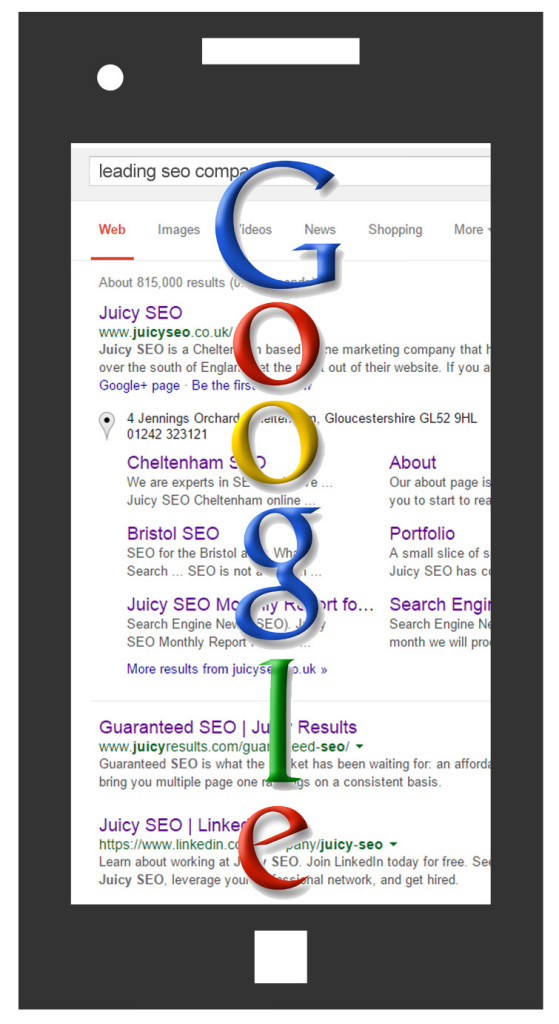
A little while ago back in April 2015 Google launched their mobile friendly algorithm which identified websites that were mobile friendly and reward them in the ranking results, remember Mobilegeddon?
Well Google have announced that there will be a further update to this algorithm coming soon.
When the ‘original mobile friendly algorithm‘ was launched it decided if your website was mobile friendly and rank it a little better in mobile search results.
It was a big change and affected many websites over night. There wasn’t any gradual roll out here!
Instead over a week the algorithm helped mobile friendly websites rank better.
So back to this new update Google have informed us about. Well instead of a big impact update the new update will continuously crawl websites page by page and update their database with what they find. If your website is already mobile friendly then you have nothing to worry about.
However if you haven’t got a mobile friendly website then the chances are this update will affect you sooner or later.
When will the Google mobile friendly update happen?
Google have stated that their target is May 2016, however if you have been following our monthly SEO report you will know Google doesn’t always hit their target dates (re: Penguin update).
If you would like to check to see if your website is mobile friendly or not, Google have created a little tool which all you need to do is enter in your website address. Here is a link to it.
Google removes right hand side adverts in search results!
Search engines like Google are continuously making changes to their search engines, it could be an algorithm update, small changes to individual results or they have just changed their logo. However this month Google have made a big change and one that will affect every person who is promoting their website!
It doesn’t matter if you are just starting out with a small blog hoping to gradually increase the number of visitors to your website or you are huge e-commerce website with 100,000s of visitors every day, if you are using SEO or PPC this is an important change!
What has changed in Google’s search results?
So what has changed?
This month Google have started to roll out removing all the adverts which are on the right-hand side of their search results and increased the amount of adverts in the main left-hand side.
“Oh is that all?!”
At first that might not seem such a big deal but trust us it could turn out to be a very big deal and could cost you money!
The Old Google Search Results
So first off let’s quickly explain what we are all used to seeing, just so you can compare and understand what has changed and how it will affect you and your websites traffic.
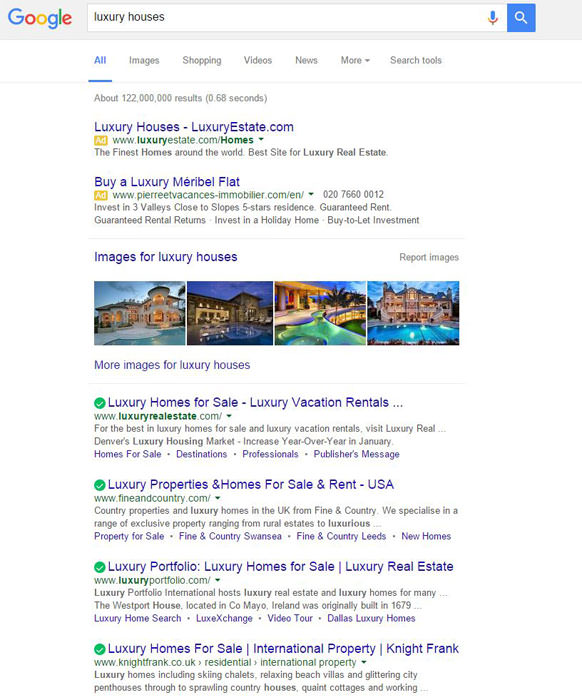
When you use Google to search for your favourite pizza takeaway or to find a handbag to match a dress, you would enter your search phrase and Google would display on the left-hand side their organic search results. Typically at the top and bottom of this list would be 2 or 3 adverts from Google’s AdWords service.
On the right-hand side of the page you would see another list of results which are all adverts which business pay for your click to take you to their website.
We are all used to this, organic search results on the left PPC paid adverts on the right.
Google Search Results – Old
The New Google Search Results
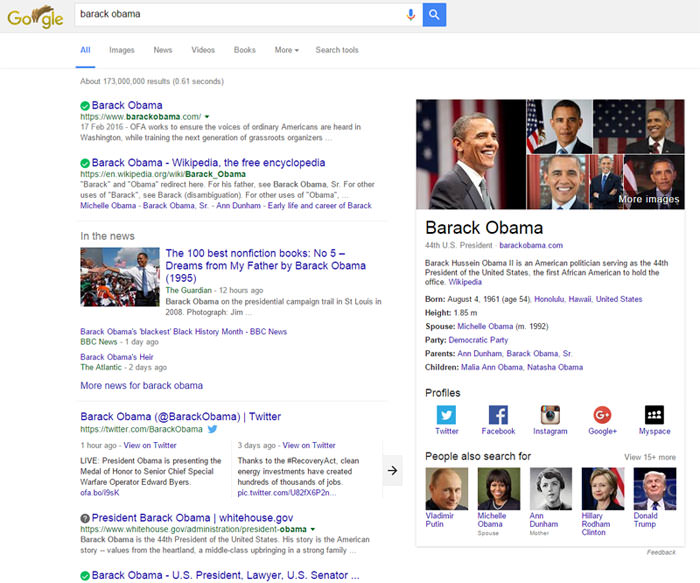
From now on you will see a new page layout when using Google’s search engine. There now isn’t a list on the right-hand side of adverts, these have been replaced (sometimes) with what Google call their Knowledge graph. You have probably seen these already, they are a more details answer to your search query in a box often with an image.
Googles Knowledge Graph
So if you were searching for Barack Obama Google would display a little bio about Barack and a photo. They get this information normally from the top ranking website for that term.
So no more right-hand adverts.
This will most likely not surprise you but Google have not decided to stop showing adverts!
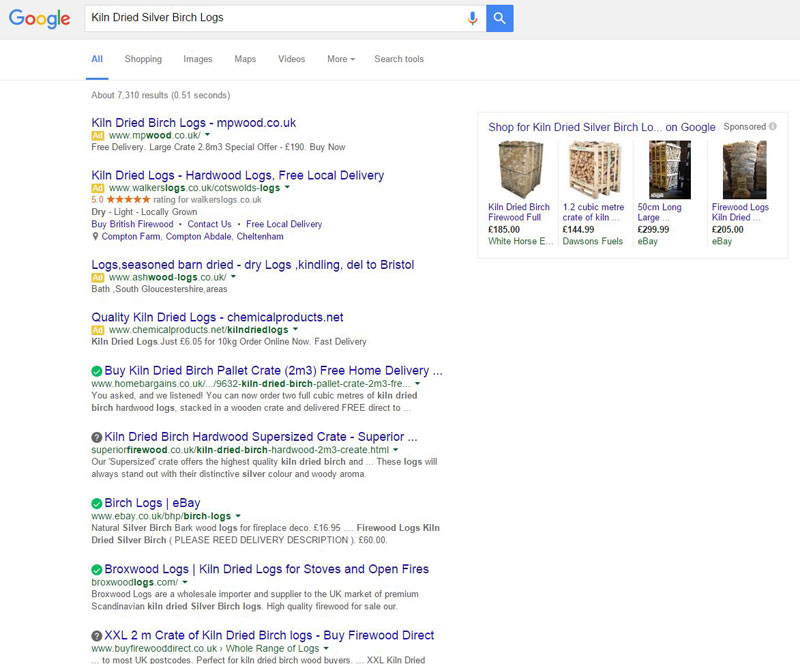
Instead they have increased the amount of AdWords PPC adverts at the top of the search results to 4 and also increased the amount at the bottom too!
Google Search Results – New
Why have Google made this change?
A very good question!
Well this question will have many different answers depending on who you ask, some might say by moving the adverts from the right to the left would increase the amount of clicks for paid adverts as people would think they are organic search results. (not us of course, we believe whatever Google says! 😉 ).
Google’s official reason is that the search results for paid and organic will look better on mobile devices after this change.
We don’t doubt that they will, in fact they do to be honest.
How will it affect SEO and PPC?
SEO – Search Engine Optimisation – Organic
For SEO we expect to see confusion for the searcher, apart from the small AD icon it is hard to see which results are adverts and which are organic. The searcher likes Organic results because they know they are ranking well on credit and must have good quality content.
As far as we can tell there will still be 10 organic search results, well certainly from the tests we have tried anyway so being on the first page of Google will still be very important.
Here are some of the things we think this change will affect SEO:
It is very important for all websites to display their ‘Sales Pitch’ above the fold (the part of your website visitors can see without having to scroll down the page). With more adverts above the organic results it will push the all important top 3 positions further down the screen.
As mentioned above it will be a while until people have realised that there are now 4 adverts at the top of the search results and they will need to look further down to get to the organic listings. If you share this post to your friends then they will all know!
The Google AD icons are very small and in yellow, which doesn’t display well on a lot of screens (hmm, funny that!).
PPC – Pay Per Click – Adverts
It’s not all doom and gloom though, PPC is a fantastic way to get your website in front of a lot of people very quickly and completely scalable so you can increase your budget as your business increases its sales.
This new change will obviously help PPC AdWords adverts which are in the top 4 results as now they are the first thing people will see after entering search results, especially on mobile devices (as reported by Juicy SEO at the start of the Year there are more people searching on mobile devices than desktop computers).
Previously it was very important to make sure your advert was in the top 3 adverts, the worse was the 4th position as it was located at the top right of the screen which people didn’t pay attention too. Now the 4th position is going to see a huge increase of CTR.
The downside for PPC managers is that you might get an increased amount of visitors who are not actually looking for your product and increase your bounce rate for your adverts. This is not good as this will affect how much you pay per click and so therefore will cost you money!
Let me explain that a little more. There is a large percentage of searchers who are really just interested in finding out about things, it could be a product or service, or just want to learn more about an industry. They are not looking to buy anything as they are not in their ‘shopping mode’.
So they use the organic results more as they know the content on websites ranking well organically should be the best place for them to find what they are looking for. Later on once they know what they want they will put on their ‘Shopping Hat’ and include using Google’s Adverts.
These ‘information’ gathers will most likely start clicking on your adverts, once they see the page is not what they were looking for they will simply bounce back to Google and click on another link, therefore costing the advertiser money for zero return.
Managing PPC campaigns has just got that bit harder!
So what have we learnt from this and what should we do?
SEO
For your SEO campaign understanding what competition you are up against has always been important, now you really need to include PPC adverts as competition!
Look for keywords which have less interest from PPC advertisers.
Getting the top two spots has just got a little more important!
PPC
For the PPCadvertiser manage your negative keywords.
Stay on top of your PPC campaign, every day, not once a month!
Make sure your adverts are in the top 3!
Juicy SEO Monthly Report Covering January 2016
Welcome to the January 2016 edition of Juicy SEO’s Monthly SEO Report, Happy New Year! 🙂
As per the last couple of years we will be continuing out monthly look at SEO and online marketing and remove all the fluffy that doesn’t really help your website perform better and highlighting all the good stuff!
We will as per normal try and keep it down to 120 seconds so you get the information you need as quick as possible so you can get on with the rest of your day.
General SEO News
– Google have recommended that you do NOT use decimal points in your pages URL, the search engine says it makes it hard for them to understand the page.
– This month Google explained that links to websites from your own do not help your website rank better (we wrote a short blog post on this on our Google ranking factor found page), obviously the link will help the other website.
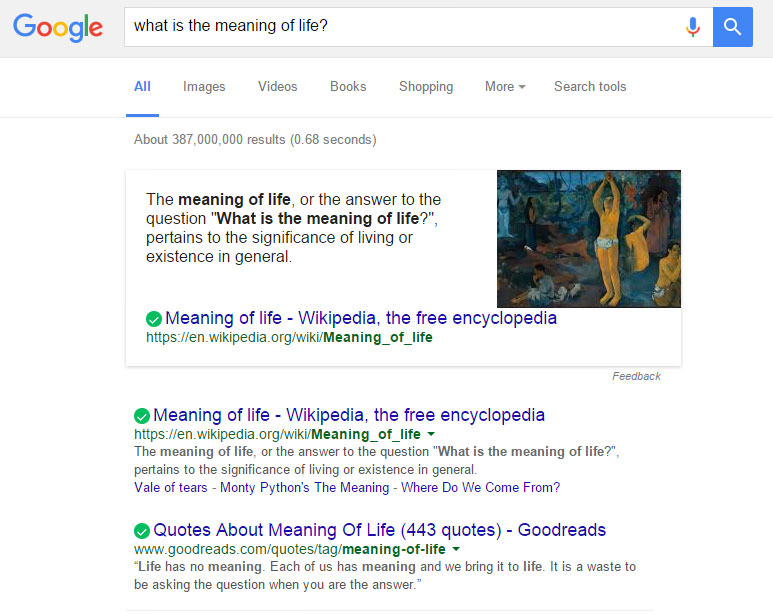
– At the top of the search results in Google you may have noticed a box containing an answer to your query. This is called ‘Featured Snippets’ and it is a section from a website which Google has decided provides the best answer. Many people in the SEO industry, myself included feel this is a disadvantage to the content owners website as it could stop the reader clicking to their site. However Google this month have said that Featured Snippets do not reduce the amount of visitors to websites but in fact increases them! hmm.
Featured Snippet example
– AOL search engine is now powered by Bing. This and other changes to Bing’s search engine has helped it gain a bigger slice of the searches (incidentally, Google is still by far the biggest search engine but their grip has loosened slightly).
– Mid January we saw some major movements in search results across the board, ‘Was this the Penguin update we have been waiting for?’No. In fact, it was a Core ranking update (not including Panda – see below) so the wait for the Penguin update continues…
– Speaking of the Core search ranking algorithm (CSRA), Google have now confirmed that the Panda algorithm is now part of the CSRA.
– This month a test was carried out and found that 25% of 10,000 searches were websites which had SSL (HTTPS). We expect this to increase in time and therefore if your website has not currently got an SSL certificate and you are in a competitive industry you should consider securing your site.
– Google have said that the new version/update of their Penguin algorithm WILL be live in the first quarter of this year. Don’t blame me if I don’t hold my breath though!
– Google is now using their Search Console more to send out messages to website owners, these messages should not be received unnoticed as some are very important for your website. Of course all Juicy SEO clients don’t need to worry as we do this for you.
– Google paid Apple $1B in 2014 to provide search results for IOS devices; with all the talk going around that Apple are creating their own search engine, surely it is a better commercial decision to keep earning $1B per year for no work?
– As you may know, Google has it’s own search engine for Images (Example), this month they have said that although they do try and index new images as quick as possible they do not update indexed images with the same URL that often. Therefore, if you are using Google image search to gain traffic (and it is a very good way to do that) and you want to index a new image, then make sure the URL is also new. It does mean however the old image is still indexed.
– And finally Bing have changed their logo this month, didn’t Google do that not so long ago? Hmm, the word ‘sheep’ comes to mind! Anyway here is the new logo next to the older yellow version and the original one.
Bing logo 2016
If you missed previous monthly reports, don’t worry they are all in our monthly SEO section.
Glossary
Panda: The Google Panda update concentrates on the quality of the web page content, if the algorithm thinks the page is of low quality it might penalise it in Google’s search results.
Penguin: Google has an algorithm called Penguin which analyses links to web pages and identifies which ones are valuable or spam links. An example of a spam link would be a paid link to your site.
Pigeon: Google’s Pigeon algorithm concentrates on Local SEO, if you have a bricks and mortar business this is something you should take note of.
Phantom (Quality Update): This algorithm rewards website pages for good content.
TDL: A TLD means Top Level Domain like .com or .net or .co.uk.
Google ranking factor found!
You may already know that Google uses around 200 different signals to help rank websites for keyword phrases. These signals are a closely guarded secret, in fact only 4 people in the World know them all (anyone of those 4 can have a job here at Juicy SEO if they like!).
So it is nice when we find out from the horses mouth one of these signals, or not a signal as the case maybe.
This week Google confirmed that links from your website to another is NOT a ranking factor. In the past there was talk that linking to other sites with a higher authority in your sector could help your page rank. So now we know that isn’t true.
Just to be completely clear here, links TO your website are still a ranking factor so keep chasing those links!
Has Google had its day?
I know what you are thinking “are you mad!?”.
Well before you say that lets just recap on a few things that have happened over the last couple of decades on the Internet. Remember Altavista? Or maybe Netscape? They were big at one point, also AOL (I know they are still around but they used to be huge!).
The fact is things move on so don’t be surprised in 10 years time Google isn’t the biggest boy any more (once I figure it out, it will be me! 🙂 ).
Anyway back to the subject in hand, the reason for this post is that each month a company called comScore release a report that monitors search engine usage in the US, and we know what happens in the US tends to happen in the UK a little later.
For desktop searches in August Google lost market share to Bing and Yahoo, although they are still the biggest with 63.8% (down from 64%) of all desktop searches a drop is still a drop.
So that is it, Google will be gone within a year then?
Ahh not quite, those clever chaps and chapesses in GoogleLand knew this was going to happen a couple of years ago (we have talked about it many times of the years). They knew that in the coming years we won’t be using desktop computers as much to search online, we would be going mobile!
Google currently control nearly 90% of all mobile searches in the US, now that’s control! But they can’t sit tight and they know this, the future will be here before you know it and it might not be mobile searches any more. Apps will be playing a bigger part in our lives in the future (Google know this hence why they are buying App companies) and then there is voice search – the future?
So to conclude although Google has lost a little ground and the chances are they will loose a little more, if you are holding any Google shares I wouldn’t worry they seem to be in control.
Why is using Google’s Adwords Tools bad for SEO?
Google provide many tools to help business owners and webmasters manage their websites, this includes a set of tools to help manage their pay per click (PPC) Adwords campaigns.
Although these tools are designed to be used with your Adwords accounts many SEO companies use some of them to help with their organic keyword targeting. There isn’t anything wrong with this and in fact we recommend using some of them, after all if Google are providing you with data about keyword relavence you would be mad not to use it!
So why the negative title to this blog post then?
Google Adwords Good for PPC not for SEO
Google’s keyword tools do provide some useful data, like how competitive a keyword is but you must remember that the tool is providing results for paid search not organic search results.
A good example of this is their ‘Keyword Ideas‘ tool, the idea of this tool is to help generate keywords that you may have not thought of. However the results from this tool tend to be focused on commercial keywords, things like ‘buy dog mints‘ or ‘ski apartments to rent‘. If you wish to target non commercial keywords this tool might not help you too much.
Something that the Adwords tools are useful for is to give you an idea how many times a keyword is searched. The figures are far from exact but if you are deciding between several keywords to target this tool can help by letting you know which is searched more. As mentioned above you can’t use the Keyword Ideas section for this but if you enter in the keywords manually you should get the data you are after.
So if you can’t rely on Google’s Adwords tools to help find new keywords, what can you use?
Here are two good FREE ways to get some keyword ideas to target.
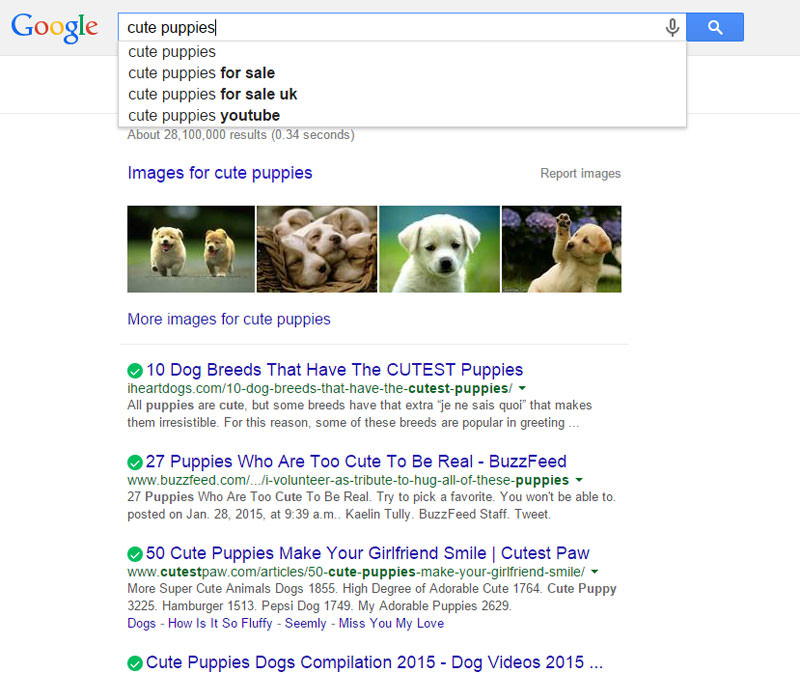
Predictive Searches
When using Google, as you type in their search bar Google often ‘guesses’ what you are going to write and lists several common used searches. This is a very handy way of finding new and commonly used multi-word keyword phrases.
If you search for your keyword in Google, scroll to the bottom of the screen and you will find a section called ‘Related Searches‘, here you will be able to find more keyword suggestions which have been used or are commonly used and are somehow connected to your entered in keyword.
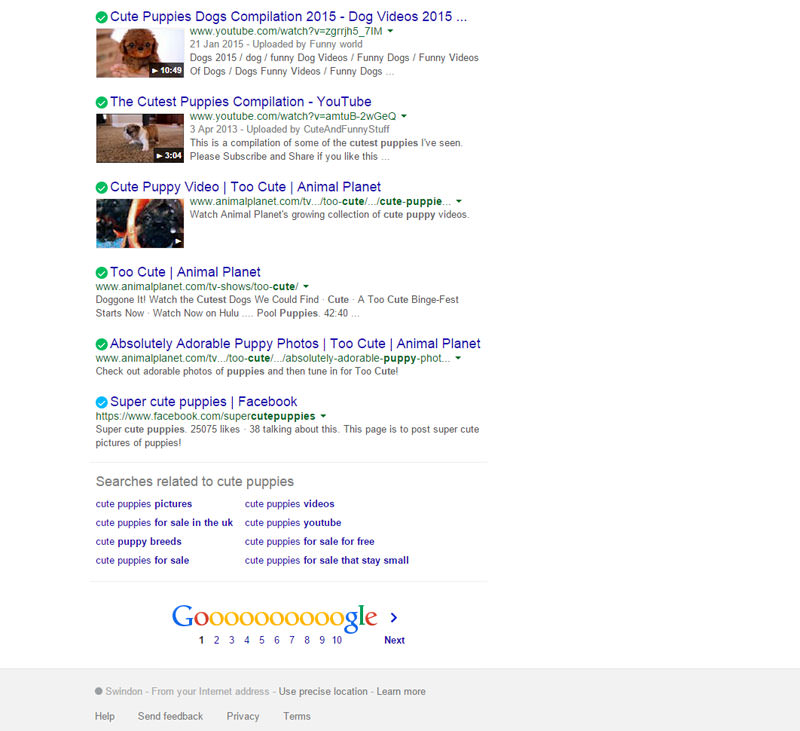
Google Related To Search Results
So Google’s Adwords does provide some useful data for SEO but you must remember it is for paid search results so could be providing incorrect data for organic searches.
Google’s Quality Update – NEW!
There has been a lot of speculation since the start of May that one or more of Google’s algorithms has had an update. The reason is that there has been a lot unusual ranking movements over the last few weeks which were not expected, out of the ordinary.
Initially it was thought to be a Panda algorithm update as it looked to target websites with low quality content. However Google have recently confirmed that it wasn’t an algorithm update at all but the introduction of their Quality Update Algorithm(it has been called the Phantom Update in the past too).
So what’s the difference?
The difference between the new Quality Update and Google’s Panda update
Lets start off with a quick reminder that Google has an algorithm called Panda which analyses the quality of the content on webpages and penalises them if they deem the quality of the content is thin or of low quality. Panda is meant to run around once a month which when ran can change a large percentage of ranking positions for lots of websites. That said though we haven’t seen a Panda update since October 2014.
This new Quality Update Algorithm doesn’t penalise webpages but in fact the complete opposite, it rewards webpages which have good content. This (we think) is a first for Google actually rewarding websites for good work! Could this be the way the search engine is going to go in the future, reward instead of penalise? We will see…
That said the results of the Quality Update Algorithm and Panda are very similar, websites with good content get ranked better than websites with poor content.
Something else which is interesting about this update is that it only affects the page rather than the whole website, so if you have a 10 page website and only 1 page has good content then 9 pages will not get a ranking pat on the back. This should ensure that the content across the website is of better quality. It also means you can look at the pages that are not performing well and work on the content to help it out.
As mentioned above when Panda actually runs it updates in one big change, this new Quality Update Algorithm is different as it is continuously running so we shouldn’t see big movements now from it. The UP side of this means if your website has poor quality and you spend a bit of time and make it superb you don’t need to wait until an algorithm update to run to see the rewards.
So you can make the changes to your webpage and wait a few days for Google to crawl your website, or you could use Google Webmaster Tools (or Google Search Console as it is now called) to ask them to re-crawl your site. You should be able to see if it has made any difference very quickly, this is great for A/B testing!
Over the last few months we have seen some big changes in Google, with Google’s Mobile Algorithm update and the advantages of having HTTPS secure servers even though they didn’t make much of a difference in the end. Maybe Google are making these changes for a longer term goal??
So the “Take Home” from this is:
Make sure every important page of your site has unique quality content
Smartphones are now more popular than desktop computers
Some interesting news came out of Google this week which if you have been reading our SEO blogs and social media posts you won’t be too shocked to hear. Google have confirmed that they are now serving more searches on smartphones than on desktop computers. I guess this also coincides with the reduction in desktop computer sales over the last few years too.
Although they only say the stats are for 10 countries however they do include USA and Japan, as the UK often follows the US a few months later expect (if it isn’t already) this to be the same here.
What is also interesting is that when Google record these stats they bundle up users of Tablet users with those of Desktop users, therefore this means at least half of all searches (in the tested countries) are now using a smartphone.
This is an huge increase even from the stats of 2014 which could be as much a double the amount of smartphone users.
Google are and will continue (we suspect) to change their user interface of their products to be aimed at smartphone users. They are currently rolling out smartphone optimised advert formats via their Adwords network, this will increase the number of smartphone clicks on adverts.
This news is very important for website owners, with the recent Google Mobile algorithm update it is very important to have a mobile friendly website as Google will be “recommending” mobile friendly websites more.
If you would like to read the statement from Google about their Adwords change for mobile users here is the link.
Mobilegeddon is here! Save the World!
Mobliegeddon, it’s a great word isn’t it?
It sounds like the world is going to end for mobiles or something, very dramatic!
However this is not going to happen so you can relax in the knowledge you will still be able to play Candy Crush on your tablet.
In fact ‘Mobilegeddon’ has been used to name the launch of a new algorithm from Google which ranks websites which are designed for mobile devices better than websites which are not. This will only affect searches using Google’s mobile search facility (ie: using Google from a mobile device).
The new algorithm was launched on 21st April 2015 and Google have said it will take a week to completely roll it out.
This isn’t something they have sprung on us, they gave us a ‘heads up’ on this a couple of months ago.
I’m writing this post on the 26th April so 5 days into the roll out. Juicy SEO test new algorithm updates all year round and this one is no exception. To test this new update we have deliberately left sites out there which are absolutely shocking to use on a mobile device purely to watch the results of this change. We are also monitoring many other websites which are not mobile friendly to gather as much information as possible.
So far after monitoring 1000s of keywords every day for many websites we have yet to see any real ranking differences between the standard search results and the mobile results. There have only been a few keywords with a very minimal difference (1 position difference for 4 keywords) which we do not think is related to this update.
This isn’t to say all these ranking positions won’t all change tomorrow as there are still few days left to go. Additionally we are monitoring UK based websites and the change just might not have filtered over the pond just yet. Google are rolling out the update Data-centre by Data-centre and it will take a week to do.
Additionally from what we have read from other SEOs based in the states it doesn’t sound like much has happened over there either.
Is there really an update coming?
Now the sceptic in me is thinking that if I ran a search engine and wanted to produce good search results for mobile devices, saying to all webmasters if you don’t make your website mobile friendly it will not rank well is a pretty good way to do it. After all users of Google whilst on mobile devices want search results which work well on their device, if the user is happy they will keep using Google.
In a recent survey it was reported that it is now a near 50/50 split of people using the internet on a mobile device compared with a desktop computer. This is clearly going to sway towards the mobile device very soon and Google know this, so providing a good search results for mobile devices will be very important for them. Other search engines are slowly catching Google up in terms of monthly users so they can’t sit on their laurels.
So all this end of the world style Mobilegeddon might just be a way to help Google get what they want?
This wouldn’t be the first time Google have done something like this, it wasn’t that long ago Google said that if you move your website to a secure server (SSL cert, using HTTPS) the website will receive a boost in their search results, even if only a little. From our test results it was a VERY little boost indeed!
However it did push some reluctant webmasters to secure their website, and we all want a secure internet so it wasn’t a bad result really was it?
Even if nothing comes of this it is still a win for website owners who have made their website mobile friendly as your visitors will appreciate it!
As said above we still have a few days to go and the ‘Mobile Friendly’ tag is being seen in mobile search results so who knows!
If you agree, disagree we would love to hear from you on our Facebook page or on Twitter.
Googles Page Layout Filter Update – October 2012
At the start of the month (October 2012) Google released several updates to it’s algorithm, one of these was called the “Page Layout Filter”. The reason for this update is due to “complaints” Google have received about having to scroll down the page of websites which show lots of adverts to get to the content they are looking for.
Now I am a little sceptical that such complaints actually exist, I think it is more likely Google flexing their muscles and telling people how they want webpages to look like on “their internet”. That aside the update has happened and does make a difference in your ranking.
To be honest moving some of your adverts below the fold and not making the page full of adverts will probably increase visitor enjoyment and might actually increase your CTR!?
So if you have lots of adverts above the fold it’s time to spread them about the page. Another nice little tip, if you have 50 links on a page going external to the site (which is far far too many), make sure you have plenty of internal links on that page too to even it out.